








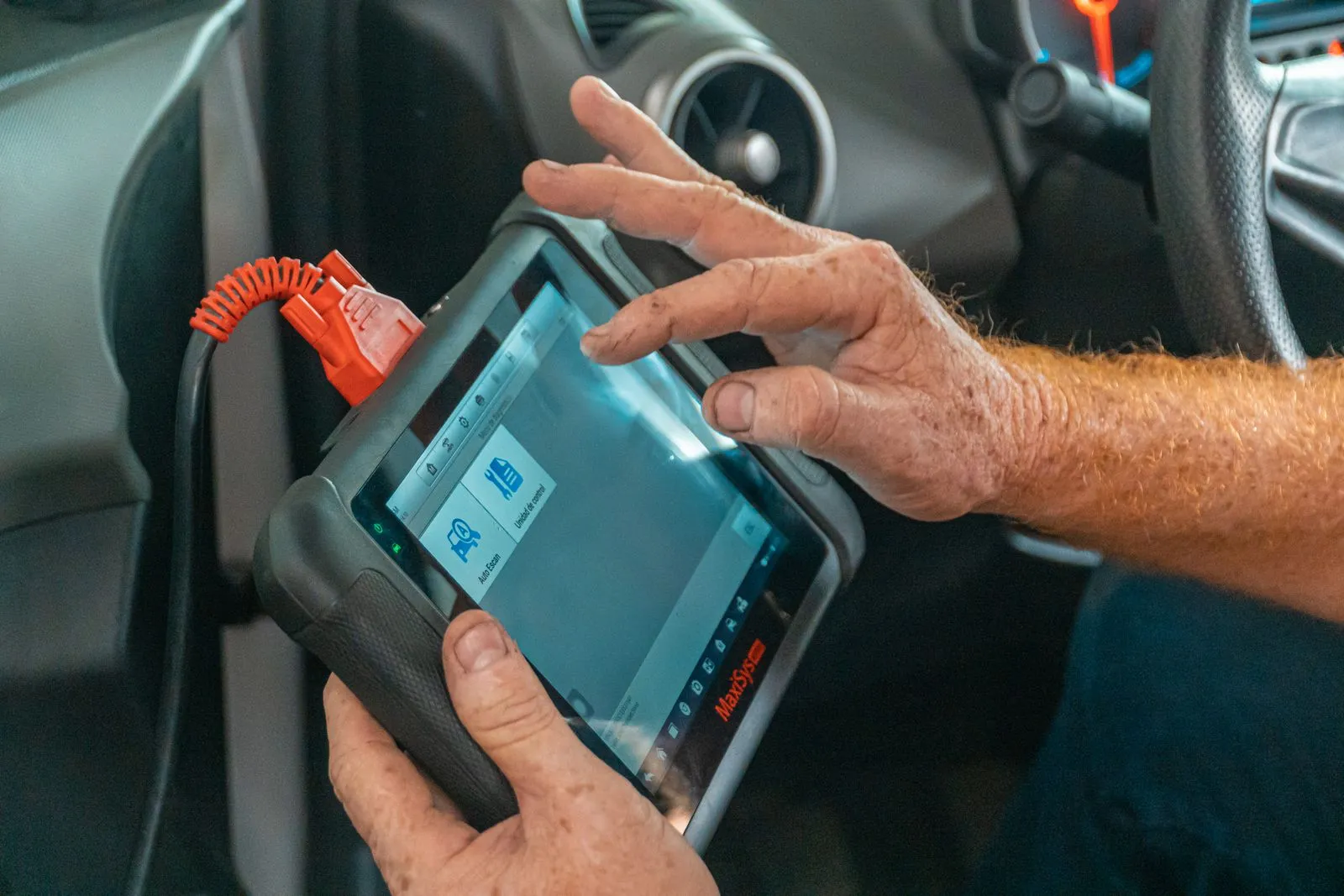
If your car has been through a collision repair in the last few years, one question decides whether the automatic braking still works: did anyone plug it in and check, before the work and after it?
Two Montana drivers say their insurer wouldn’t pay for that check unless they used the shop it wanted. They filed a class action last week.
The case, in Montana’s First Judicial District Court in Lewis and Clark County, alleges State Farm systematically refuses to pay for pre- and post-repair scans when they happen at independent collision shops. One plaintiff is a policyholder, Lana Curry, who says her claim was undervalued, reduced, or refused. The second is Francis Cote, a former Montana chief deputy insurance commissioner, whose car was hit by an at-fault State Farm driver. These are allegations, and State Farm hasn’t answered them yet.
The state already told insurers to knock it off.
Two years ago Montana’s Commissioner of Securities and Insurance put out an advisory memo saying insurers may not refuse to pay for these scans. A complaint review had turned up a pattern: carriers paying for a scan done at a shop inside their direct repair program, and not paying for the same scan at a shop outside it. Some paid the in-network shop more than the independent one.
The memo doesn’t hedge about what that is. Those practices “constitute illegal incentives or inducements to use DRP auto repair shops (also known as steering).”
Same scan. Same car. Different price depending on whether you took the adjuster’s suggestion.
That’s a nudge with a dollar sign on it, and Montana law names it. Section 33-18-224 says an insurer may not require you to use a particular body shop for an estimate or a repair, and may not “provide an incentive or inducement” for you to use one.
The carrier’s bet is that you’ll never ask. Most people hand the keys to whoever the adjuster names and assume a repaired car is a fixed car.
Modern cars make that assumption expensive. The cameras and radar behind automatic emergency braking, lane keeping, and blind-spot warning sit in the bumpers, mirrors, and windshield, the parts a collision shop pulls off first. Move them and they need re-aiming. A post-repair scan is the only thing that tells you whether the module came back online or stayed dark.
Three things at your next claim.
Name your shop before the adjuster names theirs. You pick. Say it out loud.
Get both scans written onto the estimate before work starts, not argued about after. Ask for the post-scan report when you collect the car.
If the carrier will only cover the scan at its own shop, get that in writing and send it to your state insurance department. That refusal, on paper, is the whole case.
One caveat. Section 33-18-224 is Montana law. Steering restrictions exist in most states, but the language and the teeth vary, so check your own regulator before quoting a statute at an adjuster. Montana does hand you one lever worth trying anywhere: on request, the insurer has to produce a list of every qualifying shop reasonably close to you, “without prejudice or bias.” Ask for the list. Then ignore the order it’s in.
Shopping your policy while you’re at it? Start with our auto insurance hub and the best-for picks.
How Candid Yak makes money. Some of the products we write about pay us if you apply or sign up through our links. That never changes our verdict, our rankings, or the numbers in this article. We call a bad deal a bad deal whether it pays us or not. Some brands shown in our comparison tools are placeholder examples while we finalize partner agreements, and we label them as such.