
















Update, September 3, 2026: The registration requirement started September 1 as written below, but two of the consumer-facing pieces did not. TDLR announced on August 21 that it is pausing enforcement of section 71.41, the contract disclosure rules, and section 71.43, the educational materials rule, until November 1, 2026, “to give retailers extra time to adjust to new compliance requirements.” Houston station coverage of the September 1 start reports the deadline to register also moved to November 1. And the registry you were told to check is nearly empty: 18 retailers and about 500 salespeople statewide, 2 retailers and 82 salespeople in Harris County, and no registered retailers at all in Fort Bend, Montgomery, or Galveston. Our original advice at the bottom of this piece, that an unregistered salesperson is “your whole answer,” is wrong until November. We have corrected it. The five business day kill switch is in the Act, not in either paused rule, and it still works today.
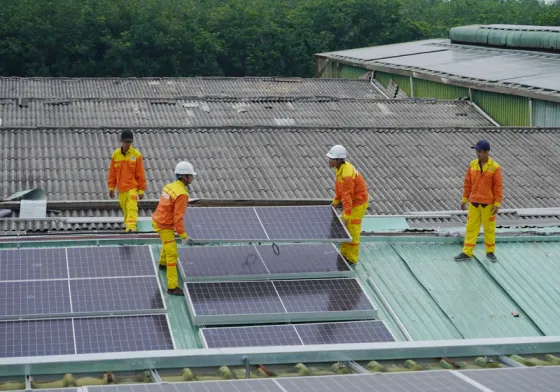
If someone sold you rooftop solar in Texas in the last five business days, you can still walk away. No penalty, no cancellation fee. And if the loan came from a lender the salesperson lined up for you, that loan has to be canceled too.
Most people who sign at the kitchen table never learn this, because the person holding the pen isn’t going to bring it up.
Texas built the rule in stages. Senate Bill 1036 created a Residential Solar Retail program at the Texas Department of Licensing and Regulation, and the contract requirements switched on back in September 2025. Since then, a residential solar sale or lease agreement has had to state the name and license number of the licensed electrical contractor doing the installation, say who is pulling the permits, and say who is getting the interconnection approved with your utility. It also has to print the last calendar date you can cancel, plus the address for sending that notice. If the contract skips the address, TDLR’s position is that you can cancel by any reasonable method.
Here is the clause worth reading twice. When the sale involves a third-party lender that is affiliated with or referred by the solar retailer, the agreement must require that lender to cancel the loan when you cancel the agreement. Not “may.” Must. The nightmare version of a solar deal is the one where the panels come off the roof and the 25-year note stays. Texas closed that door, but only for lenders the seller brought to the table.
What arrived on September 1 is the enforcement, and only some of it.
From that date, residential solar retailers and solar salespersons must be registered with TDLR to sell or lease residential solar in Texas, and the prohibited-acts section of the law became enforceable and subject to administrative action. Translation: for the past year the rules existed and the agency had almost nothing to swing.
Then the agency put two of them back down. On August 21 TDLR said it is pausing enforcement of the contract disclosure rule and the educational materials rule until November 1, “to give retailers extra time to adjust to new compliance requirements.” Those are the two rules a homeowner would actually see across a kitchen table. Houston station coverage of the September 1 start reports the registration deadline moved to November 1 as well.
The registry tells the same story. On September 1, ABC13 counted 18 registered retailers and about 500 registered salespeople in a state of 30 million people. Harris County had two retailers and 82 salespeople. Fort Bend, Montgomery, and Galveston had no registered retailer at all. Registration only opened August 10, so this is a starting line, not a scandal. It is still the reason a lookup right now can come back blank on somebody perfectly legitimate.
The state didn’t act on a hunch. KXAN’s investigators found Texans have filed more than 3,000 solar-related complaints with the attorney general’s office since 2020, and that nearly a fifth of them involved ten companies the AG had under active investigation. The pattern in those files is dull and consistent: promised savings that never showed up, bills that went up instead of down, and an installer that dissolved before the warranty was ever tested.
Now the catch, and it’s a real one. Power purchase agreements are not covered. If you don’t buy or lease the panels but instead agree to buy the electricity they produce, TDLR doesn’t regulate that deal. Nonresidential property is out. So are multifamily buildings of four or more units or stories, and small systems under one kilowatt. TDLR also only takes complaints on contracts signed on or after September 1, 2025, so an older deal goes to a different door.
Do this today. Find your contract and look for three things: the electrical contractor’s license number, the cancellation date, and whether a lender is named. If you’re still inside five business days and your gut says the numbers didn’t add up, send the written notice now and argue later. Canceling costs nothing. Regret costs 25 years.
Look up any salesperson at tdlr.texas.gov before you sign anything, but read the result correctly. Registered is a real green light. Not registered is not proof of anything until November 1, because half the industry has not filed yet and the agency has said it will not enforce the disclosure and education rules before then. Until the registry fills in, the five day cancellation window is doing the work, not the license number.
And before the next knock, put your own numbers into our solar savings calculator so you already know what a real payback period looks like on your roof. Our solar hub has the rest. A quote is much easier to judge when you aren’t hearing the figure for the first time.
How Candid Yak makes money. Some of the products we write about pay us if you apply or sign up through our links. That never changes our verdict, our rankings, or the numbers in this article. We call a bad deal a bad deal whether it pays us or not. Some brands shown in our comparison tools are placeholder examples while we finalize partner agreements, and we label them as such.
Sources
- Residential Solar Retailers At A Glance (Texas Department of Licensing and Regulation)
- Texans file thousands of complaints, feel trapped in solar panel deals (KXAN, May 5, 2026)
- Update on Residential Solar Retailers Program (Texas Department of Licensing and Regulation, August 21, 2026)
- New Texas solar protections law takes effect (KPRC 2 Houston, September 2, 2026)
- New solar panel laws are 'a huge win,' consumer advocate says (ABC13 Houston, September 1, 2026)